Dr. Jerrice Renita Donelson
Speaking
“I support organizations, educators, and learning communities to move beyond systemic barriers toward human-centered design as the cure.”
~ Dr. Jerrice Renita Donelson, former Automotive Biller/Title Clerk and Trainer turned Critical Literacy, Technical and Professional Communications UX Professor & Researcher




















My Story
I have a unique journey — Before academia, I worked in automotive dealership operations as an auto biller and title clerk. Due to no dedicated training for auto billers, I later identified this critical aperture in development, to costly process failures and built human-centered Automotive Billing Training that saved dealerships significant resources. Today, at the intersection of my knowledge, background and experience in Automotive, User Experience and Design, Training Curriculum, Instruction, and Teacher Education, Critical Literacy and Online Pedagogy, Dual Enrollment and Composition, Technical and Professional Communications, First-Year Writing, Writing Center studies, and Writing Across the Disciplines and Writing with the Community through my non-profit Scribe Tribe Writing Tutors, I bridge industry, education, and digital learning.
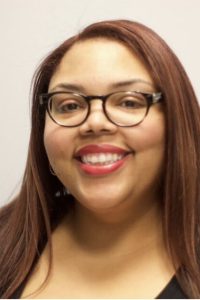
Dr. Jerrice Renita Donelson (Dr.J)–professor of technical and professional writing, and XA/UX, holds a Ph.D. in user experience, critical literacy and digital pedagogy, composition and rhetoric, and writing studies from Michigan State University. Her research centers the voices of diverse former dual enrollment students experiences with university-located composition.
She earned both a Master of Arts in Teaching secondary ELA, ELL, and educational technology; and a Bachelor of Arts in English, as a reading specialist, writing education, language, and learning with emotional and cognitive impairment, and a certificate of writing from the University of Michigan in Dearborn.
Here, is where Dr. Donelson’s interest and research of dual enrollment students experiences with literacy learning in composition and writing centers actually began.
I have always cared about stories of the human experience capturing journeys through narratives of those who are excluded and often left within the margins of design-thinking. I approach literacy teaching and learning as both a design and social justice practice—one that centers access and lived experience. Within my work across classrooms, workplaces, and communities, I believe that real and authentic intentions toward ethical, inclusive systems, can be equitable by including the experiences, stories, and of course, the people they serve.